
Good Girl Gone Bad
Play Good Girl Gone Bad
Good Girl Gone Bad Screenshots
















Good Girl Gone Bad review
Master the branching storyline, character relationships, and multiple endings in this adult visual novel
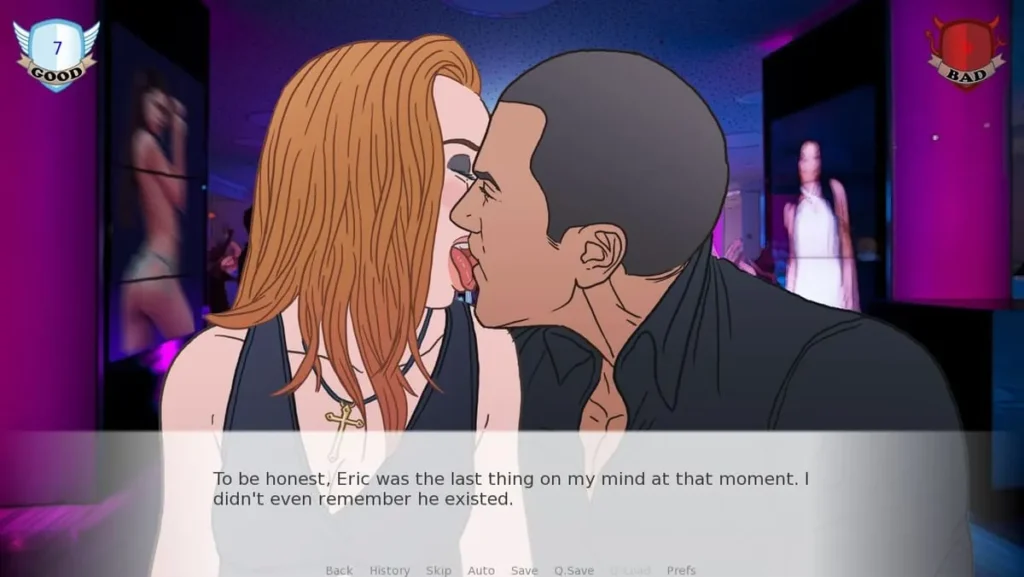
Good Girl Gone Bad is an adult visual novel that puts you in control of Ashley’s destiny through meaningful choices that shape her journey. Created by Eva Kiss, this game stands out for its hand-crafted art style, complex branching narrative, and deep character development. Unlike typical 3D-rendered experiences, Good Girl Gone Bad features unique hand-drawn assets that create a distinctive visual identity. The game explores themes of morality, temptation, and personal choice as you navigate Ashley’s path—will she remain virtuous or succumb to darker impulses? This comprehensive guide covers everything you need to know about gameplay mechanics, character relationships, earning systems, and how to unlock different endings.
Understanding Good Girl Gone Bad: Gameplay Mechanics and Core Systems
Ever feel like your life could use a little more… spice? 😈 That’s the exact itch Good Girl Gone Bad lets you scratch, putting you in the shoes of Ashley, a college student whose safe, predictable world is about to get a whole lot more interesting. This isn’t a game where you just watch a story unfold; you are the architect of Ashley’s destiny through every single decision. The core of the Good Girl Gone Bad gameplay mechanics is a beautifully complex web of interconnected systems that respond to your every whim. Think of it as the ultimate “what if” simulator, where choosing to wear a daring outfit or share a secret can butterfly-effect into entirely different story continents.
To truly master this visual novel, you need to understand the engine under the hood. This guide will break down the core systems—from the branching narrative choices visual novel fans crave to the intricate character relationship affection system—so you can navigate Ashley’s transformation with confidence. Let’s dive in!
How Choices Shape Your Story Path
From the very first scene, Good Girl Gone Bad makes one thing crystal clear: there is no single “right” path. Every dialogue option, every flirtatious glance, and every rebellious act sends ripples through the narrative. The branching narrative choices visual novel structure here is some of the most robust you’ll find. It’s not just about picking “Nice” or “Mean” responses; it’s about defining Ashley’s core personality and desires.
I remember my first playthrough, trying to be the “good girl.” I politely turned down Dave’s advances, focused on my studies, and kept my outfits conservative. The story was sweet… and surprisingly short! I hit narrative walls because I hadn’t built the right relationships or unlocked key personality flags. Contrast that with a playthrough where I embraced Ashley’s curious side early on. A simple choice to experiment with a more revealing top at a party didn’t just change that night—it unlocked new conversation threads with Natasha, made me more visible to characters like Tyrone, and even opened up part-time job opportunities that were previously greyed out.
This is the magic of the visual novel progression mechanics. The game tracks hundreds of hidden flags—invisible checkpoints that record your actions. Did you kiss someone? Take a photo? Steal something? Stand up for yourself? Each flag can act as a key to future story branches. A scene with Arthur might play out with tender concern if you’ve shown vulnerability, or with intense dominance if you’ve displayed a submissive streak elsewhere. The game constantly references your past, making your story feel uniquely yours.
Pro Tip: Don’t be afraid to save often and experiment! The most rewarding moments often come from risky choices you wouldn’t make in real life. Seeing how a single “Bad” choice in Chapter 2 can alter a conversation in Chapter 5 is a testament to the game’s brilliant design.
Character Relationships and Affection Systems
What’s a transformation without an audience? The characters in Good Girl Gone Bad are far more than love interests; they are catalysts, mirrors, and anchors for Ashley’s journey. Each has a dedicated character relationship affection system that you must nurture (or sabotage) through your choices. This isn’t a simple “like” meter; it’s a multifaceted reflection of how Ashley interacts with each person’s unique personality.
Let’s break down a few key dynamics:
* Dave (The Boyfriend): Your starting point. Interactions with Dave often represent the “old” Ashley. Choosing to be open and intimate with him strengthens a traditional romance path. However, neglecting him, lying, or flirting with others in front of him will strain your relationship, leading to confrontations and, eventually, branching paths where you might break up or explore an open relationship.
* Natasha (The Roommate): Your potential partner in crime. Natasha’s path is deeply tied to exploration and rebellion. Agreeing to her wilder schemes, sharing secrets, and presenting a “cool” facade raises her affection. She’s a gateway to many of the game’s more adventurous and public scenes.
* Tyrone (The Dealer): Represents danger, street smarts, and a completely different social circle. Gaining his trust requires showing you’re not a scared kid. This often means making bold, sometimes illegal, choices and demonstrating loyalty. His path is gritty and can lead to some of Ashley’s most dramatic shifts in worldview.
The character relationship affection system directly gates content. A high affection level with Jack might unlock private tutoring scenes that slowly turn sensual, while a low affection might keep your interactions strictly academic. Furthermore, characters talk! Your reputation with one can affect your starting point with another. If Arthur hears you’ve been seen with Tyrone, his approach to you might be more cautious or judgmental from the get-go.
Money, Experience Points, and Progression
Ashley’s internal and external evolution is powered by two core resources: Money and Experience Points (XP). Understanding this duo is crucial for mastering the experience points earning money game loop.
Earning Money (The “How”): Cash is freedom. It buys clothes, pays for events, and gets you out of sticky situations. Luckily, Ashley has several avenues, though some are definitely riskier than others. Here’s a step-by-step guide to filling your wallet:
- The Safe Route (Campus Jobs): Start at the campus job board. Jobs like “Library Assistant” or “Cafeteria Helper” pay a modest, regular salary. They’re safe, build a “responsible” reputation, and often have minimal story impact.
- The Social Route (Waitressing): Taking a shift at the local diner or bar is a classic. The pay is better than campus jobs, and it’s a fantastic way to encounter multiple main characters in a neutral setting. You might serve Dave and his friends, or catch Tyrone having a private meeting.
- The Bold Route (Modelling/Stripping): This is where the experience points earning money game gets interesting. Answering ads for art model gigs or auditioning at the nightclub “Vibe” pays significantly more. However, these jobs require specific outfits and raise your “Exposure” level, affecting how people perceive you on and off the job.
- The Forbidden Route (Dealing/Shoplifting): Aligning with characters like Tyrone can open up illegal money-making opportunities. The payout is high and fast, but the risk of getting caught carries severe story consequences, including potentially ending your run prematurely.
Earning XP (The “Who”): While money buys things, Experience Points define who Ashley is becoming. You don’t grind XP; you live it. Different actions award different types of XP that subtly shape the narrative:
* “Good” XP: Earned through charitable acts, studying, being honest, or nurturing sincere relationships.
* “Bad” XP: Gained through deception, rebellion, public lewdness, or selfish acts.
* Character-Specific XP: Spending time with a character often gives a small boost to a related trait (e.g., time with Natasha might give “Social” XP, while studying gives “Academic” XP).
This is the heart of the good points bad points system. The game doesn’t judge you for stacking “Bad” points; it just acknowledges that Ashley is becoming a different person. A high “Bad” XP total might make certain aggressive or seductive dialogue options appear, while a “Good” total might unlock more compassionate or diplomatic paths. It’s a fluid spectrum, not a binary morality meter.
The Outfit System: Your Armor and Your Signal
Your wardrobe is arguably your most powerful tool. The outfit system effects gameplay in profound, tangible ways. Changing clothes isn’t cosmetic; it’s a strategic decision that alters your stats, opens or closes doors, and sends a clear message to the world.
Each outfit belongs to a style—Average Joe, Bimbo, Whore, etc.—and carries modifiers. A conservative “Average Joe” outfit might boost your Academic XP gain in the library but make you invisible at a trendy club. Conversely, a daring “Whore” outfit might grant a bonus to Seduction attempts and unlock new dialogue options with certain characters, while causing others like your professor Arthur to disapprove or see you in a purely sexual light.
I learned this the hard way. I showed up to a study session at Arthur’s house in a full “Bimbo” set, thinking it would be a fun flirtation. Instead, the game locked me into a purely sexual path for that encounter; the intellectual conversation I wanted was completely off the table because my clothes signaled a different intention. The outfit system effects gameplay by setting the stage before you even speak.
| Outfit Style | Typical Effects | Characters Most Affected | Scene/Activity Unlocks |
|---|---|---|---|
| Average Joe | +Academic XP, Lower Visibility | Arthur, Dave (Comfort), Campus Staff | Library study sessions, family dinners, campus jobs |
| Bimbo | +Social XP, +Certain Seduction Checks | Natasha, Party-goers, Jack | Exclusive parties, fashion events, photo shoots |
| Whore | +”Bad” XP, High Exposure Gain, +Advanced Seduction | Tyrone, Club Clients, Strangers | Nightclub dancing, street encounters, certain “vibe” check scenes |
Putting It All Together: A Symphony of Systems
The true genius of Good Girl Gone Bad is how these systems converse. Let’s paint a picture: You want to get closer to Tyrone. You check your wallet (Money system) and see you’re short. You decide to take a shift at Vibe (experience points earning money game), which requires a sexy outfit (outfit system effects gameplay). Wearing that outfit in public raises your Exposure, which Natasha comments on positively the next day (character relationship affection system), but Dave sees and gets into a fight with you. That argument becomes a major branching narrative choices visual novel moment where you can mend fences or break up. The money you earned lets you buy Tyrone a drink later, progressing his storyline.
Every action is a thread in a larger tapestry. The good points bad points system and the visual novel progression mechanics work in the background, tracking your journey from innocent student to whatever you choose to become. There is no “win state,” only the story you craft through a deep understanding of these interconnected Good Girl Gone Bad gameplay mechanics. So go ahead—save your game, pick a path, and see just how bad (or good) you can be. Your Ashley is waiting. 💋
Good Girl Gone Bad delivers a compelling interactive experience through its sophisticated choice system, meaningful character relationships, and interconnected progression mechanics. The game’s strength lies in how every decision—from outfit selection to relationship choices—creates tangible consequences that shape Ashley’s story in distinct ways. Whether you’re pursuing a virtuous path or embracing darker temptations, the game rewards exploration and experimentation with its multiple endings and branching narratives. The unique hand-drawn art style combined with deep character development sets it apart from typical visual novels. For players seeking a narrative-driven experience where their choices genuinely matter, Good Girl Gone Bad offers substantial replay value as you discover how different decision paths lead to dramatically different outcomes. Dive into the game, experiment with various choices, and uncover all the story branches this complex visual novel has to offer.