
Dating My Daughter
Play Dating My Daughter
Dating My Daughter Screenshots

























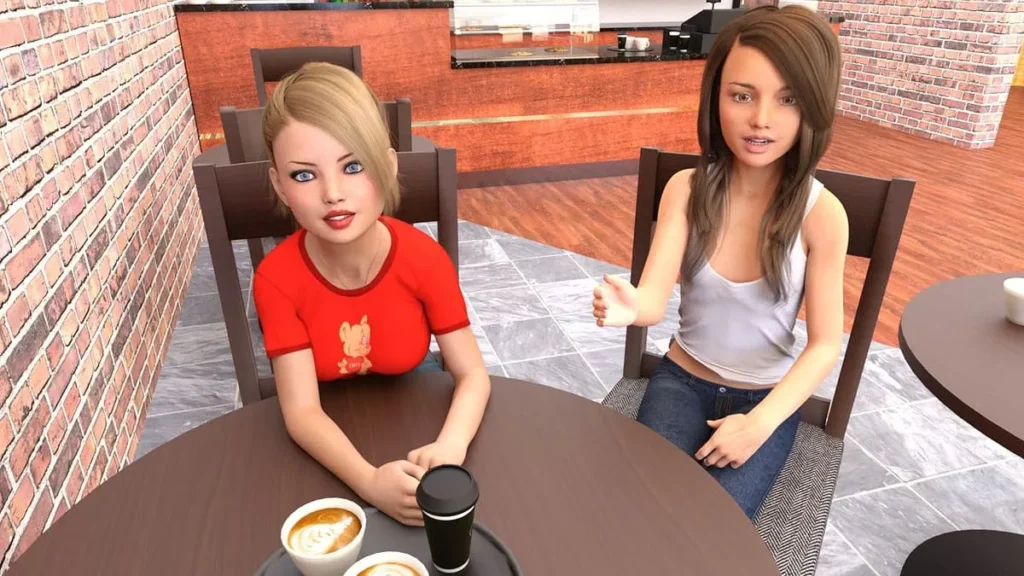
Dating My Daughter review
Master every choice, unlock all scenes, and navigate the interactive visual novel experience
Dating My Daughter stands out as a unique interactive visual novel that challenges players to navigate complex relationship dynamics and make meaningful choices that shape the narrative. Unlike traditional games focused on action or combat, this experience emphasizes psychological depth, emotional connections, and the consequences of player decisions. With its rich 2D graphics, natural character voices, and immersive storytelling, the game creates an experience similar to watching an interactive movie where you control the script. Whether you’re new to visual novels or a seasoned player, understanding the game’s mechanics, choice system, and hidden stat mechanics will significantly enhance your experience and help you unlock all available content.
Understanding Dating My Daughter: Game Mechanics and Core Features
So, you’ve clicked on this Dating My Daughter walkthrough guide because you’ve hit a wall, right? 😅 Maybe you’ve gotten a bad ending, or you’re staring at a choice that feels like it holds the weight of the world, terrified to click. I’ve been there. My first playthrough was a disaster—I ended up more alone than when I started, all because I didn’t understand the silent rules of the game. Unlike loading a save in an action game, a wrong turn here can steer your story into a ditch for hours of gameplay.
That’s the unique magic—and challenge—of this experience. Dating My Daughter game mechanics aren’t about reflexes or puzzle-solving; they’re about empathy, attention, and understanding a living, breathing narrative web. Every smile, every sigh, every scene unlocked is a direct result of your cumulative choices. This chapter is your foundation. We’re going to strip down the engine of this visual novel interactive choices masterpiece so you can build the story you truly want. No more guesswork. Let’s master the system together.
What Makes This Visual Novel Different From Other Games
If you’re coming from games filled with combat or complex platforming, this can feel like a different universe. Your primary controller here isn’t a joystick—it’s your heart and your head. 🧠❤️ The core gameplay loop is deceptively simple: read, feel, choose. But beneath that surface churns a sophisticated simulation of relationships.
The game focuses almost entirely on emotional storytelling and relationship building. There’s no health bar to manage, but there are emotional states. There’s no inventory to optimize, but there’s a history of conversations that characters remember. Think of it as tending a delicate garden rather than conquering a battlefield. Each character has her own history, desires, and insecurities, and your role is to navigate those waters. The “action” is in the dialogue, the lingering glances, and the choices between being supportive, flirtatious, protective, or distant.
This creates an unparalleled sense of consequence. In many games, an NPC forgets your rudeness five minutes later. Here, a single dismissive comment in Chapter 1 can close off entire branching narrative paths by Chapter 4. The game remembers everything, weaving your decisions into the very fabric of the story. It’s this deep, causal chain of events that makes understanding the mechanics not just helpful, but essential for getting the outcomes you desire.
Interactive Choice System and How Decisions Shape Your Story
At every critical juncture, the game presents you with a choice. These aren’t just cosmetic; they are the forks in your road. The visual novel interactive choices system is the DNA of your entire playthrough. Early on, I learned this the hard way. I treated choices like I would in other games, often picking the “funny” or sarcastic option. Big mistake. 😬 I inadvertently set my relationship with a key character on a purely platonic path before I even realized there was another option.
Each decision does two things simultaneously:
1. It progresses the immediate scene in a specific direction.
2. It invisibly adjusts your standing with the characters involved.
These choices create a cascade effect. For example, consistently choosing to spend time with Character A over Character B doesn’t just build a bond with A; it actively tells B she is not a priority. The game’s narrative branches are not just about “good” or “bad” endings, but about whose story you are choosing to pursue. A path that leads to a deep, romantic connection with one character often means permanently altering or closing the door on a relationship with another.
Pro Tip: There is rarely a “right” choice in a vacuum. There is only the right choice for the story you want to tell. Are you aiming for a committed romance, a complex web of friendships, or something else? Your choices are the tools to sculpt that narrative.
This system of branching narrative paths means replayability is through the roof. A different choice at just three key moments can lead you to a completely different set of scenes, conflicts, and resolutions. It’s why a comprehensive Dating My Daughter walkthrough guide is so valuable—it maps out these forks for you, so you can navigate with intention rather than hope.
The Heart of the System: Friendship, Love, and Hidden Stats
Here’s where we get into the nuts and bolts. The game tracks your progress through two visible (but opaque) systems and one secret one. Think of them as your relationship report cards.
Friendship Points (FP) and Love Points (LP) are the primary currencies of connection. Every positive interaction—listening supportively, giving a thoughtful gift, sharing a moment of understanding—grants FP. As friendship deepens, certain choices can begin to grant LP instead of or in addition to FP, signaling a romantic shift. You can’t see the numerical values, but the characters’ reactions and the scenes that become available are your gauge.
The crucial thing to remember is that these points are gates. 💎 Reaching a certain threshold of LP with a character is what unlocks their more intimate scenes and, ultimately, their romantic conclusion. Conversely, neglecting FP can leave a relationship stagnant, making the character unavailable for deeper story arcs.
Now, let’s talk about the secret sauce: the hidden stat points system. Introduced subtly as relationships progress, these are specific metrics the game tracks based on your physical interactions during certain private moments. Unlike dialogue choices, these are often about where you choose to focus your attention—a touch on the hand, a glance, etc.
These hidden stats are incredibly precise. They measure affinity for specific types of intimacy and comfort levels. Building these hidden points is what allows you to transition from a romantic interest to a truly intimate partner within the story. Failing to build them can leave a relationship feeling stuck in a “nice” but unfulfilling loop.
To make this crystal clear, here’s a breakdown of how these systems work together:
| Stat Type | How You Earn It | Primary Gameplay Impact |
|---|---|---|
| Friendship Points (FP) | Supportive dialogue, spending time together, helping with problems, choosing platonic activities. | Unlocks deeper conversations, personal story reveals, and establishes the foundation for any future relationship. Low FP can lock you out of a character’s core story. |
| Love Points (LP) | Flirtatious dialogue, romantic gifts, choosing intimate moments over friendly ones, successful “date” scenarios. | Directly unlocks romantic scenes and is the primary determinant for achieving a character’s specific romantic ending. The key to character relationship unlocks. |
| Hidden Stats | Specific, repeatable interactions during private moments (e.g., focusing on particular affectionate gestures). | Governs the availability of the most intimate scenes. Reaching certain hidden stat thresholds is often the final requirement for completing a character’s full romantic path. |
Mastering the Hidden Stat Points and Relationship Tracking
The hidden stat points system is what separates casual players from masters. 🏆 Since these stats are completely invisible, you must learn to read the characters’ reactions like a book. A blush, a shy smile, a pulling away, or a reciprocated touch—these are your feedback mechanisms.
From around Day 10 onwards, certain private moments become mini-games of affection. The game presents you with options on how to interact. Each choice boosts a specific hidden stat. For instance, consistently choosing gentle, reassuring contact might build a “Trust” or “Gentle Affection” stat, while choosing more passionate options might build “Desire.” Different characters respond differently! What works wonderfully for one might make another uncomfortable and stall your progress.
This is where relationship points tracking becomes an art form. You must keep a mental (or actual!) note of what seems to work. Does she lean in when you brush her hair back? Does she change the subject if you focus somewhere too intimate too soon? The game is constantly communicating with you through its animations and dialogue shifts.
Here’s my personal insight: I once focused solely on LP-generating choices with a character, rushing for romance, and completely ignored building the specific hidden stat for “Emotional Vulnerability.” The result? I hit a literal wall in the story. All the LP in the world couldn’t unlock the final scene because I hadn’t made her feel safe enough, only desired. The hidden stat points system ensures the relationships have depth and requisite stages.
Navigating the Branches and Permanent Consequences
This brings us to the most critical aspect of the Dating My Daughter game mechanics: permanence. Your choices don’t just add points; they prune possibility trees. ✂️🌳
The game features a consequence system that is remarkably strict. This is most vividly seen when you explicitly reject a character’s romantic advances or consistently choose another over her. For example, if Elena confesses her feelings and you turn her down kindly but firmly, that door is not just closed—it’s locked and the key is thrown away. She will remain in the story, but her role will permanently shift to that of a friend (or even a distant acquaintance), and all her unique romantic branching narrative paths vanish from your playthrough.
This creates a powerful, sometimes nerve-wracking, sense of weight to your decisions. You cannot romance everyone in a single playthrough. You are forced to role-play a genuine person with limited time and emotional capacity. This design is brilliant because it makes every playthrough uniquely yours. The character relationship unlocks you achieve define your story.
Your early game choices set the stage for everything. Choosing to have a heartfelt talk with your daughter on the porch in Episode 1 might seem minor, but it could establish a foundation of openness that makes her more likely to confide in you about a crucial problem in Episode 8. Conversely, brushing her off early on can make her distant and secretive later, locking you out of the very scenes where you could be most supportive.
Mastering Dating My Daughter is about embracing this interconnectedness. It’s about seeing the story not as a linear path with detours, but as a vast, living map where every step determines which parts of the terrain you will ever get to see. With this guide to the core game mechanics, you’re no longer wandering in the dark. You have the map and the compass. Now, you can start the journey of crafting your perfect story, one meaningful choice at a time. 🗺️✨
Dating My Daughter offers a sophisticated interactive experience that rewards careful decision-making and strategic planning. By understanding the game’s mechanics, hidden stat system, and branching narrative structure, you can unlock all available content and experience multiple unique endings. The game’s strength lies in its emphasis on meaningful choices and emotional storytelling, making each playthrough feel distinct based on your decisions. Whether you’re pursuing a specific character route or attempting to unlock all scenes and achievements, this comprehensive guide provides the knowledge needed to maximize your experience. Take your time exploring different choices, pay attention to how your decisions affect character availability, and don’t hesitate to replay sections to experience alternative paths. The depth of Dating My Daughter’s narrative ensures that multiple playthroughs will reveal new content and perspectives you might have missed on your first experience.